Showing posts with label Hyundai. Show all posts
Sunday, October 16, 2011
Tuesday, September 20, 2011
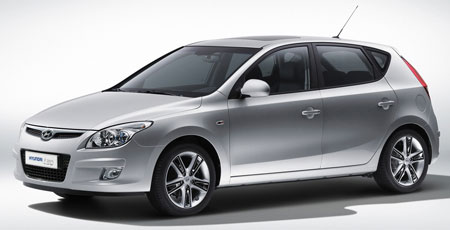
Hyundai i30 Review, Exterior & Interior
Hyundai i30 Engine:
It's a Hyundai actually, and an impressive piece of engineering. Nicknamed the 'Beta' engine, it may not be the best motor in its class, but it's very easy to live with. There's precious little harshness when the engine revs out (which was surprising) and it's not too noisy. Best of all it's got a good environmental record, with low CO2 emissions and good fuel economy.
The fuel-injected 4-cylinder engine provides the car with a good deal of acceleration in the lower gears and only bogs down if you stuff up your gear change, like when you miss a gear and hit 4th instead of 2nd.
| Engine -i30 |
Reading the spec sheet of a new car, in this instance 105kW and 186Nm, doesn't mean much these days. Everyone's got variable valve this and twin cam that, to the point where the real world test is the most authoritative way to gauge a cars performance.
On the street the car feels every bit a 105kW buzz box, getting its power to the front wheels via the 5-speed manual very effectively. There's enough power there to override the considerable tyre grip, but the ESP and traction control systems regulate the power delivery so that the wheels rarely miss a beat (though you can turn it off).
Hyundai claims the 2.0-litre petrol engine in the i30 returns fuel economy of 7.2L/100km on the combined city and highway cycle, and we recorded 7.6L/100km which is still pretty good. This involved about 40 per cent highway driving, 20 per cent city driving and commuting, and the rest pedal-to-the-metal driving along twisty roads to test the chassis.
All told, that's a very impressive fuel economy figure.
Hyundai i30 Exterior:
When I picked up the Hyundai i30 SR I was somewhat surprised with what I saw: a stylish design with an overt European influence. Granted, we're testing the range-topping SR sports model complete with the big wheels and a drop body kit to make it look even cooler, but that doesn't take anything away from the car's overall shape.
Apart from the slightly over-developed headlights (the extended trailing edge irks me), the Hyundai i30 looks good in my opinion.
How's this: on the Saturday I picked up the car a random bloke driving a Holden Crewman stuck his neck out the window to comment on the car, which had me momentarily speechless. "Nice looking car mate. What is it?" Err, thanks man. It's an i30, a new Hyundai.
I half thought he was mocking me, but catching a glimpse of the car reflected in the windows of a Melbourne City department store showed that the i30 does in fact cut a sharp figure.
For mine the wheels go a long way to sealing the deal - five spokers with subtle chrome gloss accents - but as mentioned the overall body shape is easy on the eye. It's unashamedly European, with smooth flowing lines and nothing too radical or try-hard to offend the eye.
From the side view the window line kicks upwards towards the rear and this lends the car a sophisticated style, while the rear end has a passing resemblance to a BMW 1 Series.
The front end has a modern look about it, with a stylised grille and a good sized front air dam below that. There's also fancy projector beams housed in the headlight clusters either side of the grille. I'm no great fan about the extended trailing edge of the headlight design that wraps around into the front quarter panels, but in hindsight I think that without that little 'kick' the front end would too closely resemble a Toyota Corolla.
Hyundai i30 Interior:
One of the most impressive elements of the new Hyundai i30 is the interior. It looks good, it feels good, it's functional and it's roomy. It has a modern look and feel and I was initially incredulous: this can't be a Korean car, can it?
Starting with the drivers view, the instrument display shows two large dials - speedo and tacho/rev meter - which are fairly plane Jane, but very legible thanks to a bold font. At night they glow blue, giving the cabin a funky, almost futuristic ambiance. Between the two main instrument dials is a rectangular LCD display that details trip functions - fuel usage, average speed, distance to empty and so on.
The front seats are fairly comfortable with a decent amount of cushioning, but when you start throwing the i30 into corners the meagre side-bolsters leave a little to be desired.
The leather wrapped steering wheel is smaller than normal - a very good thing in my book as it usually means there's less effort needed to make the car turn - and features useful cruise and audio controls (though the entry level SX models miss out on steering wheel controls).
Overall dashboard and interior plastics are rather impressive; the dash plastics are soft touch with a thatched texture and little things like the unique electric window buttons and dual USB and audio AUX ports (for MP3 players and USB stick connectivity) provide for a nice point of difference from its small car rivals.
A curvy dash design like the wings of a bird arching around the driver and front passenger creates a nice sense of space up front, and the centre console is aglow with twin cobalt LCD screens that detail the heating/cooling and the stereo systems respectively.
Everything works well, is relatively ergonomic, and an air conditioned glove box - essentially a 'chully bun' to use the New Zealand vernacular - adds yet more functionality to the car's cabin.
The rear seats are well cushioned making longer journeys bearable for back seat passengers, and leg room is not bad for a car of this size. A pair of adults or three ankle biters will find ample room in the rear on short to medium journeys.
Standard features in all i30 models include things like dual front airbags, anti-whiplash front head restraints, pollen filtered air conditioning, power windows, remote entry with alarm and power steering. ESP is standard on our test model, the $26,490 i30 SR, but will cost $1,790 and $990 for the base and mid-range SX and SLX models respectively (which also adds curtain and front-side airbags on the SX).
Our test car, the SR, adds things like an well sorted 6-speaker stereo, alloy pedals, leather inserts on the seats, ESP, six airbags, and of course the 17-inch wheels and body kit, which is an above average level of equipment for under $27,000. The boot isn't bad either, with a very usable 340 litres of space that expands to 1250 litres when you fold the rear seats down.
Overall I really warmed to the i30's interior. The design is modern but not completely soulless, and it's clear that Hyundai has tried a few different ideas with the interior design, such as a smart looking centre console and vertically aligned air vents.
Overall:
There's a big pile of cash in your bank account, you're on the hunt for a trendy Euro-style small car and there's a short list that includes name brands like Toyota, Mazda, Ford and Mitsubishi. Do yourself a favour and add Hyundai to that shortlist, because the i30 is a bona fide contender.
Hyundai is the fastest growing mainstream car maker in the world and after driving the i30 for a week it's not hard to see why. The vehicle is, at the very least, competent in every respect and excels in some, particularly the overall design and the new Beta 4-cylinder engine.
The company was once the butt of many jokes but it's small car is now on level pegging with the Toyota Corolla and Mazda3, matching and in some cases beating its rivals in terms of standard equipment, engine output, fuel efficiency, ride and handling.
The i30 is a remarkably savvy small car and quite probably the Korean company's best vehicle to date.
It shows that Hyundai hasn't been complacent. It's taken the bull by the horns and made a red hot go of it. After in-depth research and development the i30 was created and I have a sneaking suspicion it will go very close to upsetting the status quo in the hugely popular Australian small car market.
Monday, February 21, 2011
Hyundai Veloster Rally Car
At the Chicago Auto Show , Hyundai Motor America has announced that its new Veloster coupe will be competing in the Northern Hemisphere Summer X Games during the 2011 U.S. Rallycross Championship Series.
With the next generation of Hyundai buyers eagerly awaiting the upcoming launch of the Veloster, Hyundai has fuelled the excitement by teaming with Rhys Millen Racing (RMR) and Red Bull to campaign the car in the high-energy sport of rallycross.
Hyundai Motor America adds the Veloster coupe to its motorsports program with the help of champion race car driver Rhys Millen, who fabricated and will race the first 500-horsepower AWD Veloster rallycar in the 2011 U.S. Rallycross Championship.
RMR and Hyundai are constructing a second Veloster rally car which will be a shared ride between rally champion Marcus Dodd and world record freestyle motorbike rider Robbie Maddison. Millen and Maddison will drive the Veloster rally cars at the Northern Hemisphere Summer X Games. A third Veloster rally car will be constructed to compete in the 2WD-class in a limited number of U.S. Rallycross Championship events and will be piloted by soon to-be-announced celebrity drivers.
"We feel the Veloster is a perfect fit for X Games and the U.S. Rallycross Championship series as we expand our motorsports efforts," said Mike O'Brien, vice president, Product and Corporate Planning, Hyundai Motor America. "The all-new 2012 Veloster is a playful, fun-to-drive car and thanks to Rhys and his team we're excited to introduce it to racing fans ahead of its planned launch in this summer. I teamed up with Rhys' father, Rod, nearly twenty years ago for Hyundai's original Pikes Peak rally program, so it is great to be back in the sport again with his son inspiring a new generation."
"We've transformed the Veloster's lightweight, rigid architecture into a rally car with an engine producing 500-horsepower and 600 lb.-ft. of torque, said Millen, professional race driver and founder of RMR. "We hope some of the performance learnings from the Veloster rallycross program will have a role in the development of future Veloster models."
Twelve RMR employees applied everything they know about fabricating race cars into the Veloster rally car. The original production Veloster was stripped back to bare metal, and the chassis spent five days in an alkali-bath removing all rubber and adhesives. The chassis was also stitch welded for added structural rigidity.
Millen quickly decided to take the already lightweight Veloster, and make it even lighter. His crew took molds of the Veloster body panels to replicate them out of carbon/Kevlar. The bonnet, doors, quarter panels, and front and rear fascias are all built out of carbon/Kevlar. The carbon/Kevlar panels are 75 percent lighter than the sheet metal they replaced. This weight-saving approach is carried throughout the car without compromising its powerful curves, and surface detail or the hidden third door.
Downforce has been further increased by a custom RMR rear wing. The bonnet has been vented to dissipate heat. The curb weight for the car is now 1204.7kgs.
The interior of the RMR Red Bull Hyundai Veloster rally car is unrecognisable from its origins as a well-appointed sporty coupe designed with everyday driving in mind. All comfort and convenience features are removed to make way for a custom-fabricated eight-point safety cage and firewall, which reinforce the Veloster's already stiff chassis. Braces on both the A and B pillars also tie into the strength of the body. The safety cage is a rally safety requirement, and a Sparco racing seat further protects the driver in the overhauled cockpit.
The RMR Red Bull Hyundai Veloster rally car utilises a custom suspension with increased travel to allow for the harsh jumps rallycross cars have to make.
The Hyundai 2.0-litre four-cylinder engine is further enhanced by a HKS ball bearing turbocharger. The engine is mated to an X-Trac six-speed sequential transmission. The end result is a Veloster producing 500-horsepower (373kW) and 600 lb.-ft. of torque (813Nm) of torque.
To ensure the enhanced power plant translates all the way to on-track performance, RMR added custom built 18-inch HRE wheels and 245/40R18 Hankook Racing tyres. Stopping power comes from 14-inch Alcon brake rotors and six-piston Alcon callipers. The entire carbon/Kevlar body is wrapped in a striking paint scheme combination of blue, white and orange.
A rallycross race consists of five rally-style cars, who will start at once, jumping and sliding on a pavement and gravel road course. The challenging short course features jumps, unbanked turns, dirt and bitumen. Each car must also complete a "Joker" lap at some point during their heat. A Joker lap is a small detour - normally over a jump -adding a level of unpredictability to the heat's outcome, by changing a driver's strategy in an instant.
Rhys Millen will be taking on David Higgins and Dave Mirra in Subaru WRX STIs, Ken Block and Tanner Foust in Ford Fiestas and Antoine L'Estage in his Mitsubishi EVO X, to name a few.
With the next generation of Hyundai buyers eagerly awaiting the upcoming launch of the Veloster, Hyundai has fuelled the excitement by teaming with Rhys Millen Racing (RMR) and Red Bull to campaign the car in the high-energy sport of rallycross.
Hyundai Motor America adds the Veloster coupe to its motorsports program with the help of champion race car driver Rhys Millen, who fabricated and will race the first 500-horsepower AWD Veloster rally
RMR and Hyundai are constructing a second Veloster rally car which will be a shared ride between rally champion Marcus Dodd and world record freestyle motorbike rider Robbie Maddison. Millen and Maddison will drive the Veloster rally cars at the Northern Hemisphere Summer X Games. A third Veloster rally car will be constructed to compete in the 2WD-class in a limited number of U.S. Rallycross Championship events and will be piloted by soon to-be-announced celebrity drivers.
"We feel the Veloster is a perfect fit for X Games and the U.S. Rallycross Championship series as we expand our motorsports efforts," said Mike O'Brien, vice president, Product and Corporate Planning, Hyundai Motor America. "The all-new 2012 Veloster is a playful, fun-to-drive car and thanks to Rhys and his team we're excited to introduce it to racing fans ahead of its planned launch in this summer. I teamed up with Rhys' father, Rod, nearly twenty years ago for Hyundai's original Pikes Peak rally program, so it is great to be back in the sport again with his son inspiring a new generation."
"We've transformed the Veloster's lightweight, rigid architecture into a rally car with an engine producing 500-horsepower and 600 lb.-ft. of torque, said Millen, professional race driver and founder of RMR. "We hope some of the performance learnings from the Veloster rallycross program will have a role in the development of future Veloster models."
Twelve RMR employees applied everything they know about fabricating race cars into the Veloster rally car. The original production Veloster was stripped back to bare metal, and the chassis spent five days in an alkali-bath removing all rubber and adhesives. The chassis was also stitch welded for added structural rigidity.
Millen quickly decided to take the already lightweight Veloster, and make it even lighter. His crew took molds of the Veloster body panels to replicate them out of carbon/Kevlar. The bonnet, doors, quarter panels, and front and rear fascias are all built out of carbon/Kevlar. The carbon/Kevlar panels are 75 percent lighter than the sheet metal they replaced. This weight-saving approach is carried throughout the car without compromising its powerful curves, and surface detail or the hidden third door.
Downforce has been further increased by a custom RMR rear wing. The bonnet has been vented to dissipate heat. The curb weight for the car is now 1204.7kgs.
| Hyundai Veloster Rally Car Interio |
The RMR Red Bull Hyundai Veloster rally car utilises a custom suspension with increased travel to allow for the harsh jumps rallycross cars have to make.
The Hyundai 2.0-litre four-cylinder engine is further enhanced by a HKS ball bearing turbocharger. The engine is mated to an X-Trac six-speed sequential transmission. The end result is a Veloster producing 500-horsepower (373kW) and 600 lb.-ft. of torque (813Nm) of torque.
To ensure the enhanced power plant translates all the way to on-track performance, RMR added custom built 18-inch HRE wheels and 245/40R18 Hankook Racing tyres. Stopping power comes from 14-inch Alcon brake rotors and six-piston Alcon callipers. The entire carbon/Kevlar body is wrapped in a striking paint scheme combination of blue, white and orange.
A rallycross race consists of five rally-style cars, who will start at once, jumping and sliding on a pavement and gravel road course. The challenging short course features jumps, unbanked turns, dirt and bitumen. Each car must also complete a "Joker" lap at some point during their heat. A Joker lap is a small detour - normally over a jump -adding a level of unpredictability to the heat's outcome, by changing a driver's strategy in an instant.
Rhys Millen will be taking on David Higgins and Dave Mirra in Subaru WRX STIs, Ken Block and Tanner Foust in Ford Fiestas and Antoine L'Estage in his Mitsubishi EVO X, to name a few.
| General specifications | |
| Country of origin | South Korea |
| Numbers built | N/A |
| Produced in | 2011 |
| Introduced at | 2011 Chicago Auto Show |
| Body design | RMR for Hyundai Motor North America |
| Engine | |
| Configuration | Straight 4 |
| Location | Front, transversely mounted |
| Displacement | 2 liter / 122 cu in |
| Valvetrain | 4 valves / cylinder, DOHC |
| Fuel feed | Fuel Injection |
| Aspiration | HKS Turbo |
| Drivetrain | |
| Gearbox | XTrac 6 speed Sequential |
| Drive | All wheel drive |
| Dimensions | |
| Weight | 1205 kilo / 2656.6 lbs |
| Performance figures | |
| Power | 500 bhp / 373 KW |
| Torque | 813 Nm / 600 ft lbs |
| BHP/Liter | 250 bhp / liter |
| Power to weight | 0.41 bhp / kg |